
For motorhome enthusiasts, installing two televisions connected to a single satellite decoder can be an excellent way to enjoy a complete multimedia experience while traveling. This allows, for example, watching different programs in the living area and the bedroom without needing two subscriptions. This setup requires a certain level of technical know-how to ensure that the connection is optimal and that the signal is distributed correctly between the two devices. Specific steps must be followed, and some practical tips taken into account to guarantee the success of this project.
Setting up your satellite decoder for two televisions in a motorhome
Learning to connect two televisions to a satellite decoder in a motorhome requires an understanding of the components and their interaction. The satellite decoder, the heart of the system, must be capable of transmitting signals to two screens simultaneously. To achieve this, the use of a HDMI splitter is necessary. This device allows the signal from the decoder to be distributed to both televisions without loss of quality.
Ensure that the HDMI cable used to connect the decoder to the splitter is of good quality to maintain the integrity of the transmitted signals. From there, two additional HDMI cables will be connected to each television. Consider positioning your decoder in a strategic location in your vehicle to minimize cable length and avoid unnecessary signal loss.
Satellite reception is a fundamental factor in this installation. Your satellite dish must be correctly oriented to capture TNT signals, thus ensuring the availability of channels. A FRANSAT decoder, for example, could be an option to consider, allowing you to receive a wide range of TV channels in your motorhome.
For those looking to add extra flexibility to their setup, integrating an HDMI switch can be useful. This allows multiple audio and video sources to be connected to the televisions, providing the ability to switch between different inputs, such as a DVD player or a gaming console. Keep in mind that the quality of satellite reception can be affected by external factors, such as weather or geographical location, and adjustments to your satellite antenna may be necessary as you travel.
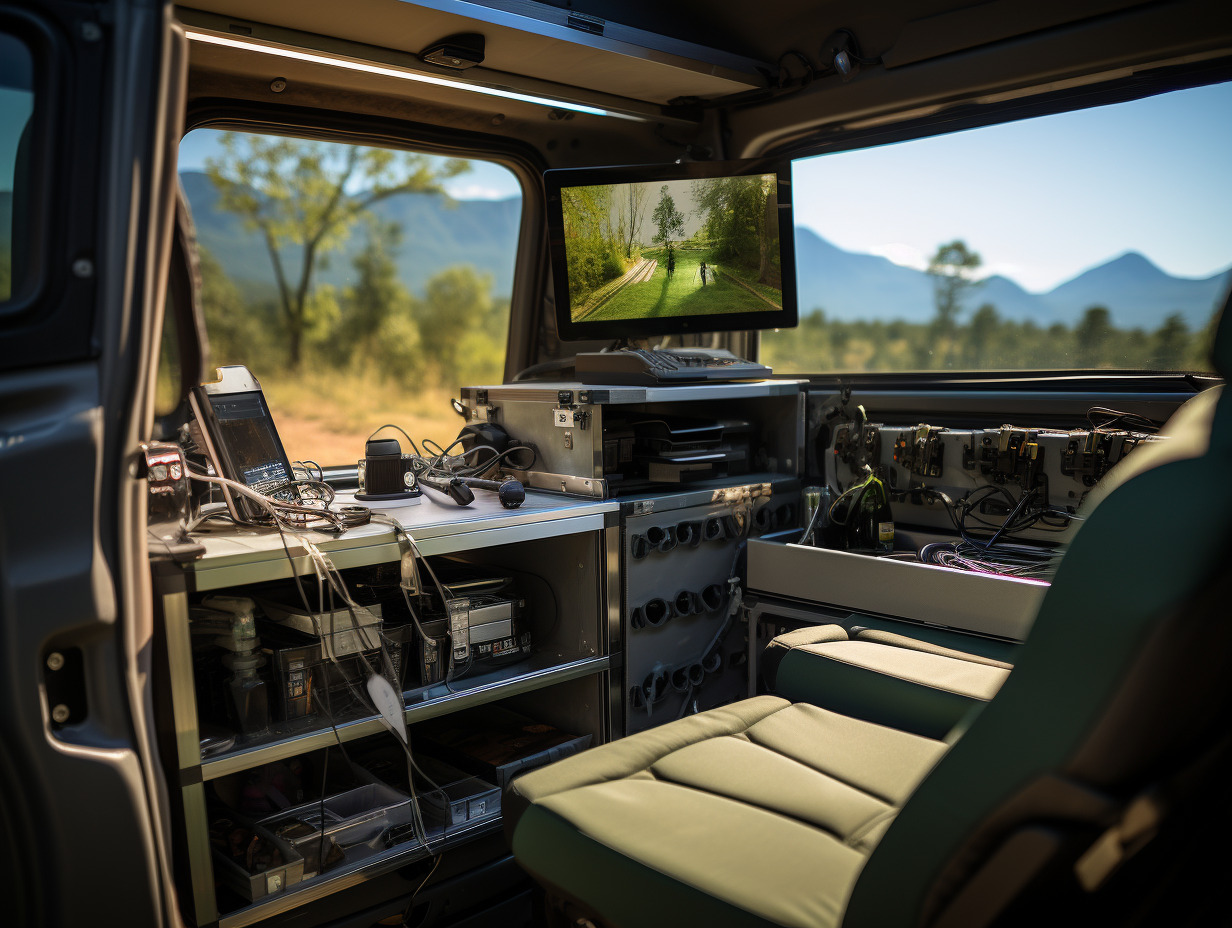
Practical tips and troubleshooting common issues
Installing a satellite dish in a motorhome must be done with surgical precision. The adjustment of the dish is crucial for the quality of TV signal reception. In case of poor reception, check the orientation and tilt angle of your satellite antenna. Signal measurement tools are available to fine-tune this step, which is essential for receiving TNT SAT channels. Once adjusted, the dish must be securely fixed to withstand the vibrations and movements of the vehicle.
In the event of connection issues, the RCA cable can serve as a backup solution to connect the two televisions. However, this method may result in a decrease in signal quality. If the HDMI cable is at fault, replacing it is advisable to maintain optimal transmission. Also, check the connections at the splitter and HDMI switch, which must be firmly established to avoid any signal interruption.
The position of your motorhome can influence satellite reception. Avoid areas with heavy tree cover or recessed locations that could block the signal. If in doubt, reposition your vehicle in an open space to allow your antenna to best capture the signals. Remember that the mobility of your motorhome requires regular attention to the reception equipment to ensure a seamless television experience.