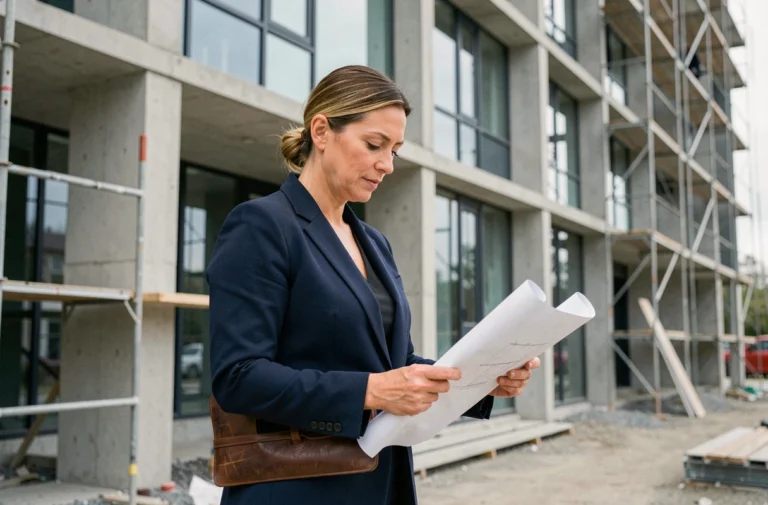
Urban planning is often perceived as a field reserved for experts and theorists, revolving around complex concepts and long-term plans. Its most significant impact lies in its ability to reshape urban spaces, directly influencing the quality of life for city dwellers. Cities, faced with challenges such as overpopulation, climate change, and socio-economic inequalities, seek to transform themselves through urban planning. The transition from urban theory to tangible initiatives requires a multidisciplinary approach, involving public policies, citizen participation, and technological innovations.
The foundations of modern urban planning: from theory to practice
Urban planning, a professional and scientific field dedicated to the spatial organization of human settlements, became structured as an academic discipline in the 1970s and 1980s. Visionary and pragmatic, this discipline encompasses land use planning, expanding its scope of intervention beyond just the urban fabric. Consider interdisciplinarity as a fundamental characteristic of this discipline, which requires a spatialized perspective and thoughtful organization of human activities.
Research in urban planning and development is a dynamic scientific and academic field, marked by intense debates over theoretical frameworks and the structuring of the field. The scope of intervention differentiates development, which is broader than just urban land, from urban planning, which is more focused on the city. The theories and practices in development and urban planning, although sometimes deemed vague or lacking evidence, form the epistemological foundations of these disciplines. They guide the development of urban projects that strive to meet contemporary demands for sustainability and social equity.
For professionals and students aspiring to shape the cities of tomorrow, immersing themselves in these foundations is essential. To learn more about urban planning training, institutions such as APERAU and the National Council of Universities offer resources and study programs tailored to current challenges in spatial planning and urban development. This synergy between teaching, research, and professional practice is fundamental for the realization of innovative and relevant urban projects.

Case studies and implementation of transformative urban planning in cities
Transforming cities requires a vision and implementation suited to contemporary challenges. The case studies of cities like Paris and Lyon concretely illustrate the application of the principles of transformative urban planning. Paris, with its ‘Reinventing Paris’ project, and Lyon, through the Confluence, have highlighted innovative urban models that integrate sustainable development strategies and citizen participation. These initiatives reflect a commitment to the sustainable city, demonstrating that urban projects can combine aesthetics, functionality, and environmental responsibility.
The concept of smart city, integrated into these urban projects, is a pillar of sustainable urban planning that relies on the use of advanced technologies to improve quality of life in urban environments. The integration of ICT in the management of urban services and the establishment of smart infrastructures are at the heart of urban planners’ concerns to achieve more efficient management and better responsiveness to citizens’ needs.
Europe, more broadly, provides a favorable framework for experimenting with these transformative urban projects. Exchange and funding programs, such as those offered by the European Union, allow for testing and sharing best practices among cities. This transnational cooperation is essential for consolidating knowledge and promoting the dissemination of urban solutions that can be adapted and implemented in different geographical and socio-economic contexts.