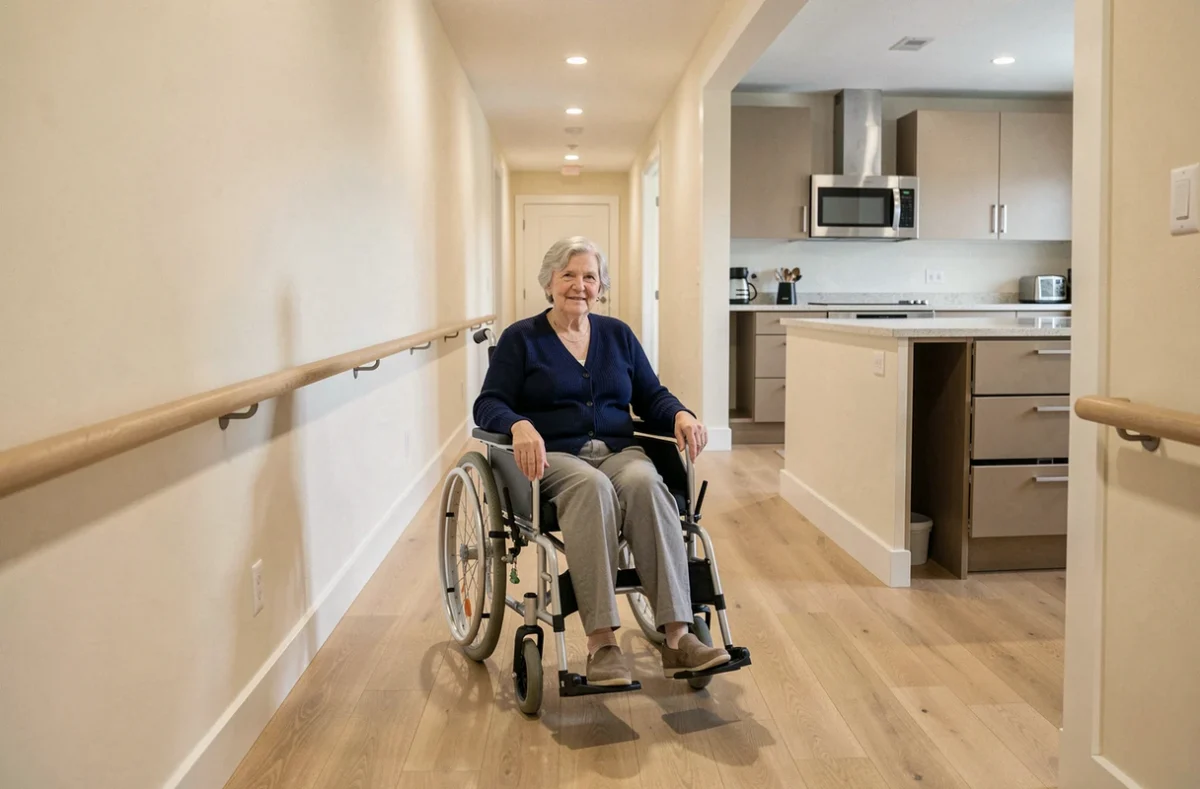
A loved one receives a diagnosis, returns home from hospital or experiences changes in their abilities. The first instinct is often to start work in the bathroom or widen a doorway. These steps matter, but they are not enough if the home is designed around a need that is fixed at a particular point in time.
Before ordering an ultra-low shower tray, it’s worth asking: how can you plan adaptations that remain suitable as the person’s disability or habits change?
Adaptable home modifications: planning for changing needs
Most guides describe renovations room by room. The problem is that a modification tailored too closely to someone’s current situation may no longer be suitable a few months later. A grab bar installed at a specific height for someone who walks with a cane will no longer be useful if they start using a wheelchair.
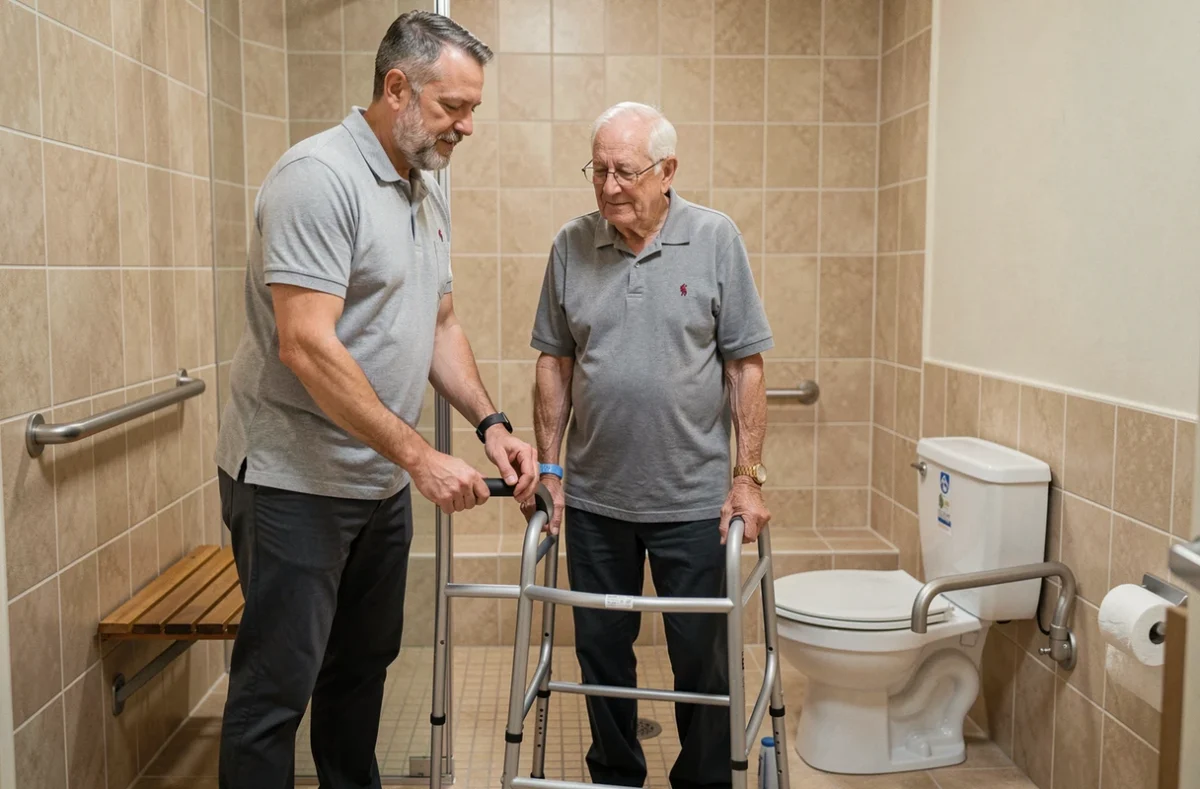
Designing adaptable modifications means planning for repositionable fixtures and modular equipment rather than permanent installations. For example, a wall-mounted support rail lets you move a grab bar or shower seat without drilling new holes.
The same principle applies to the kitchen: a height-adjustable worktop costs more to install, but avoids having to replace the cabinetry if the person’s needs change. Control systems (switches, shutters, door openers) also benefit from this approach.
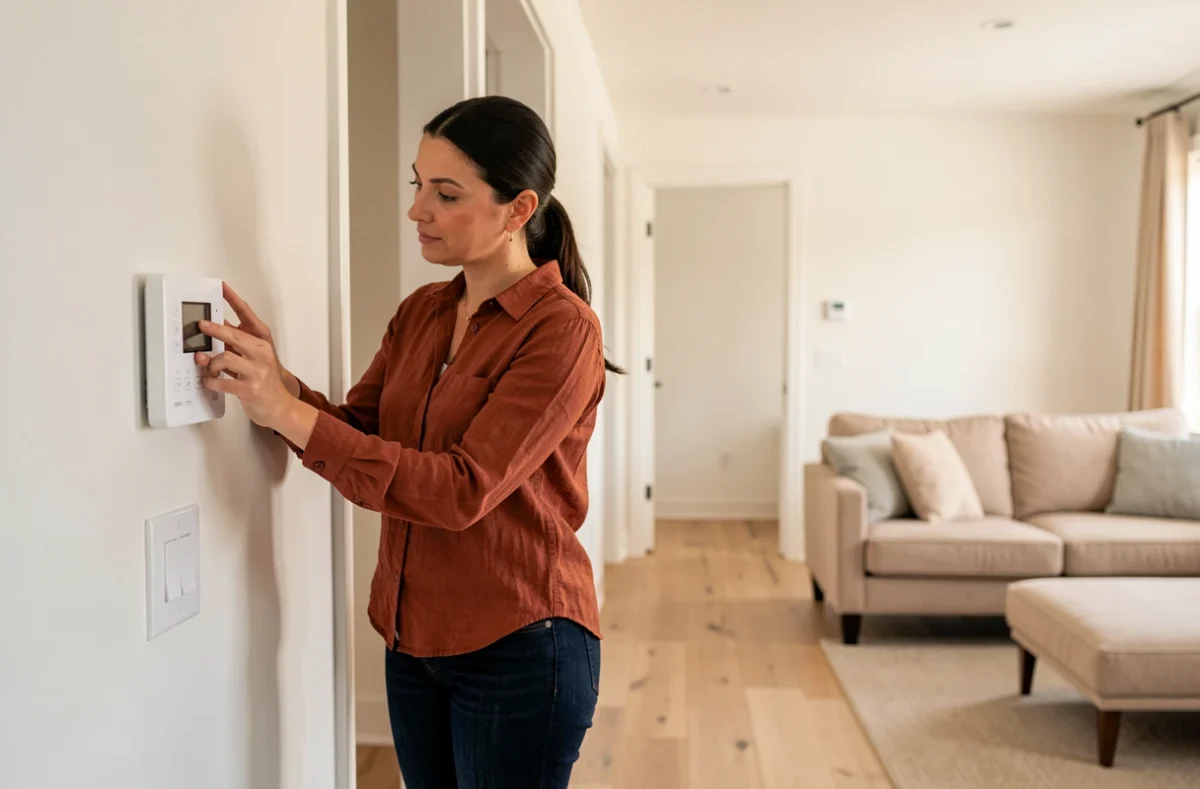
Regulations for tenants also list the installation or adaptation of control, opening, closing and alert systems among the permitted works. This means that even in a rental property, it is possible to replace a standard switch with a large-surface model or a connected button without making major changes to the home.
When considering how to adapt your home to a loved one’s disability, the key word is not “permanent” but “reversible”.
Occupational therapist assessment before adaptation work
Have you noticed a loved one going around a piece of furniture, avoiding a hallway or giving up on using their bathtub? These signs point to practical difficulties, but they don’t necessarily show which modifications should take priority.
An occupational therapist observes how the person actually moves around the home, not just the layout of the rooms. A home visit results in personalized recommendations on storage heights, handle types, required doorway widths and grab bar placement.
This assessment helps avoid three common mistakes:
- Investing in expensive equipment (a stairlift, a motorized walk-in shower) when a simpler solution would have met the actual need
- Choosing a standard modification that does not suit the person’s body shape or habits
- Overlooking critical areas such as the entrance or electrical controls because they seem less important than the bathroom
Occupational therapy is not automatically covered by the French health insurance system. Funding depends on the scheme used (disability compensation benefit, local assistance, out-of-pocket costs). Despite the expense, a professional assessment can save money by preventing unnecessary work.
Rental property: tenants’ rights when adapting their home
Many families think renting means no modifications are allowed. That’s not the case.
A tenant can ask their landlord in writing for permission to carry out adaptation work. For certain modifications specified by regulations, if the landlord does not respond within the prescribed period, consent is deemed to have been given. This mechanism protects tenants from administrative inaction.
The work covered by this scheme is not limited to widening doorways or installing an accessible shower. It also includes alert systems, adapted controls and closing mechanisms. In other words, replacing a round door knob with a lever handle or installing a smoke detector adapted for people with hearing loss falls within this framework.
However, check the exact rules before work begins: the distinction between adapting and altering the property affects the tenant’s obligations at the end of the lease.
Financial assistance for home adaptations: an overview
Several schemes are available to help fund home adaptations for people with disabilities. The disability compensation benefit (PCH) can cover some of the costs. MaPrimeAdapt’ is available to owner-occupiers who meet income requirements.
In 2026, the MaPrimeAdapt’ application service was temporarily suspended at the start of the year and then reopened in February. This kind of budget-related interruption is not unusual. It means you should check the status of the scheme before signing a quote, so you are not left without funding once work is underway.
Some local authorities offer comprehensive support. In the Yvelines, for example, the Department and the Agence Autonomy provide a pathway that includes everything from a personalized needs assessment to information about financial assistance and application procedures. It is worth checking with the relevant department or intermunicipal authority to see whether similar local support is available.
Checklist before starting an adaptation project
- Have an occupational therapist assess the person’s needs before choosing equipment
- Check the status of financial assistance (PCH, MaPrimeAdapt’, departmental grants) when applying, not several months beforehand
- Choose repositionable fixtures and height-adjustable equipment wherever possible to accommodate changing needs
- If renting, send the request to the landlord in writing and note the date so you can track the response deadline
- Separate urgent work (bathroom safety, access to the home) from comfort improvements that can be planned for later
Adapting a home to a loved one’s disability is not a one-off project. It is an ongoing process that evolves with the person. A well-planned adaptation can remain useful three years from now, provided you choose flexibility over the most dramatic solution.