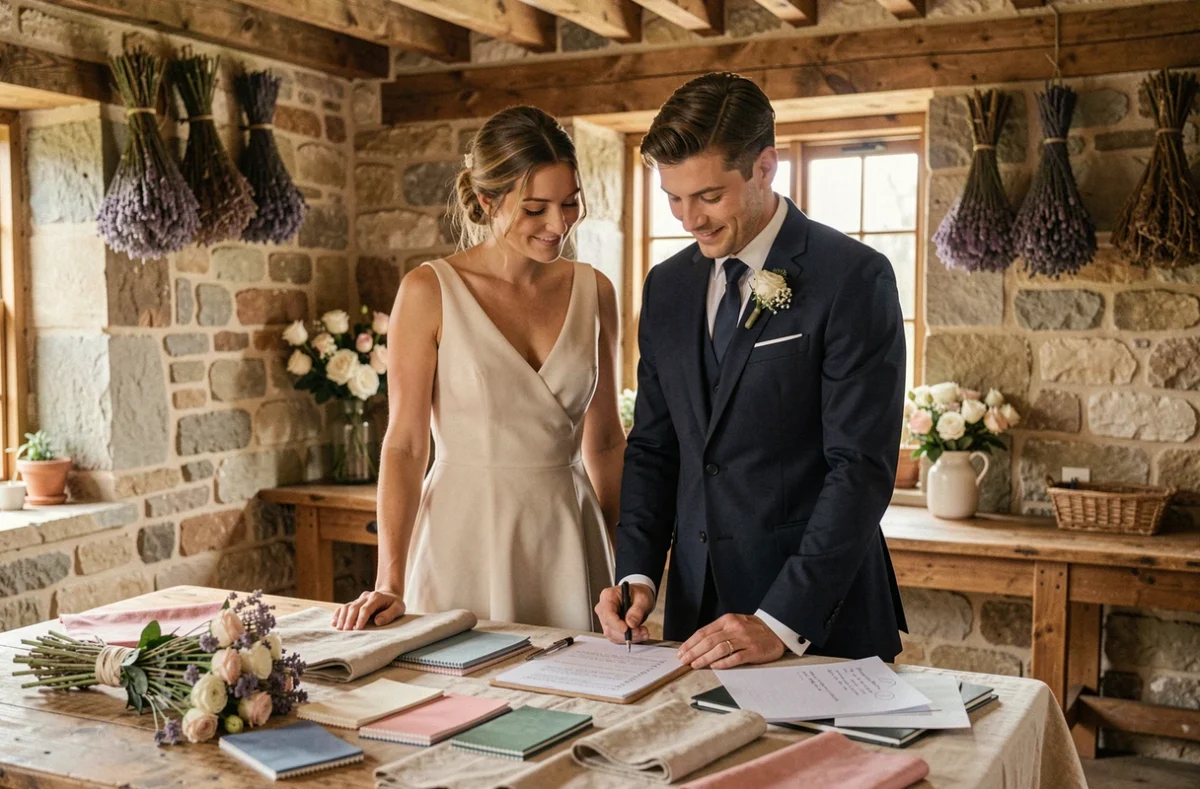
In France, only a marriage performed by a civil registrar has legal standing. A secular or symbolic ceremony can be added, but it cannot replace the civil ceremony. This distinction, which is often unclear to couples just starting to plan, shapes the timeline: publication of the banns, the legal waiting period before the ceremony, and the choice of town hall. Planning a wedding with peace of mind starts with factoring in these administrative requirements before thinking about flowers or the menu.
Venue accessibility: a selection criterion, not a last-minute adjustment
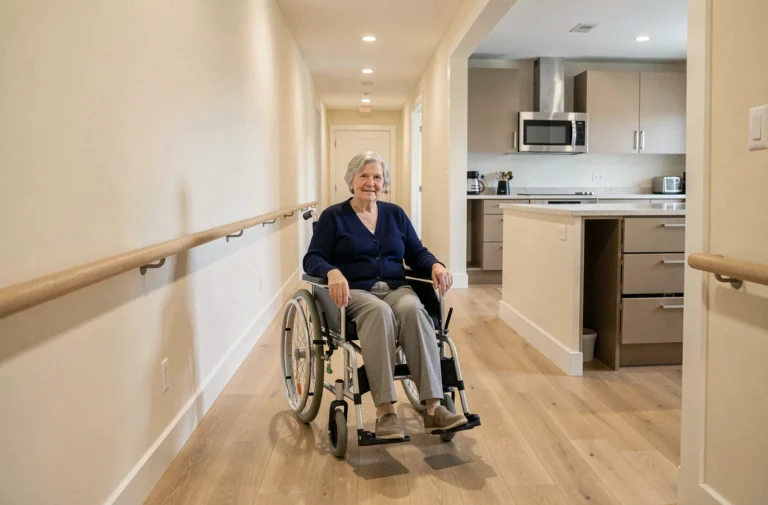
Most wedding guides treat accessibility as a box to tick at the end of the process, even though it affects a significant number of guests: older people, guests with limited mobility, and families with young children.
Choosing a venue with their needs in mind from the outset makes all the difference. A property with narrow staircases, a distant car park, or restrooms upstairs effectively excludes some guests. The venue’s accessibility affects the comfort of all guests, not just those directly concerned.
When visiting a venue, there are several practical points worth checking:
- Step-free access or a ramp between the car park, ceremony room, and reception room, including for strollers
- Accessible restrooms on the same level as the main room, with no steps to navigate
- A quiet space or separate room where a parent can take a tired child or an older guest can rest away from the noise
- The distance between the parking area and the entrance, which can be a problem for anyone who has difficulty walking if it is more than a few dozen metres
Platforms such as Mariage Service let you filter vendors and venues by practical criteria like these, helping you avoid unnecessary visits.

Wedding budget: set aside a contingency fund instead of cutting it too close
Going over budget is a recurring issue when planning a wedding. Even with a budget set in advance, last-minute changes (catering surcharges, unexpected equipment rentals, weather-related adjustments) can drive up the bill.
Separating essential expenses from optional extras is the first step. The venue, catering, outfits, and officiant form the core budget. Elaborate floral decorations, a photo booth, or fireworks are extras that can be postponed or cut without compromising the day.
Setting aside a financial reserve, even a modest one, helps protect against the domino effect of unexpected costs. Couples who commit their entire budget from the outset have no room left to cover a catering surcharge or pay for a weather-related backup plan.
Outdoor weddings: a backup plan that goes beyond rain
More and more couples are choosing to hold their ceremony or reception outdoors. The risk of bad weather is rarely overlooked, but it is often reduced to the question of rain alone.
Wind, thunderstorms, and extreme heat each call for a different response. A marquee protects against rain, but not strong winds that send table decorations flying and make conversation difficult. Above-average temperatures can turn a ceremony in full sun into an ordeal for older guests or pregnant women.
The backup plan therefore needs to be more detailed than “we’ll move indoors.” Check that the venue’s indoor space can accommodate all guests seated, that its access meets accessibility needs (step-free access, wide doorways), and that someone on the planning team is responsible for making the call. Appointing a weather coordinator avoids indecision on the big day.
Wedding timeline and civil marriage paperwork
Administrative tasks are the easiest for couples to put off. The banns must be published at the town hall sufficiently in advance of the wedding date, and the legal waiting period means the paperwork must be prepared ahead of time: recent birth certificates, proof of address, identity documents, and sometimes a certificate of customary law for dual nationals.
Some town halls offer limited appointment slots, especially on Saturdays. Book the date at the town hall before signing a contract with the reception venue to avoid having to juggle two incompatible schedules.
Secular ceremony: an addition, not a replacement
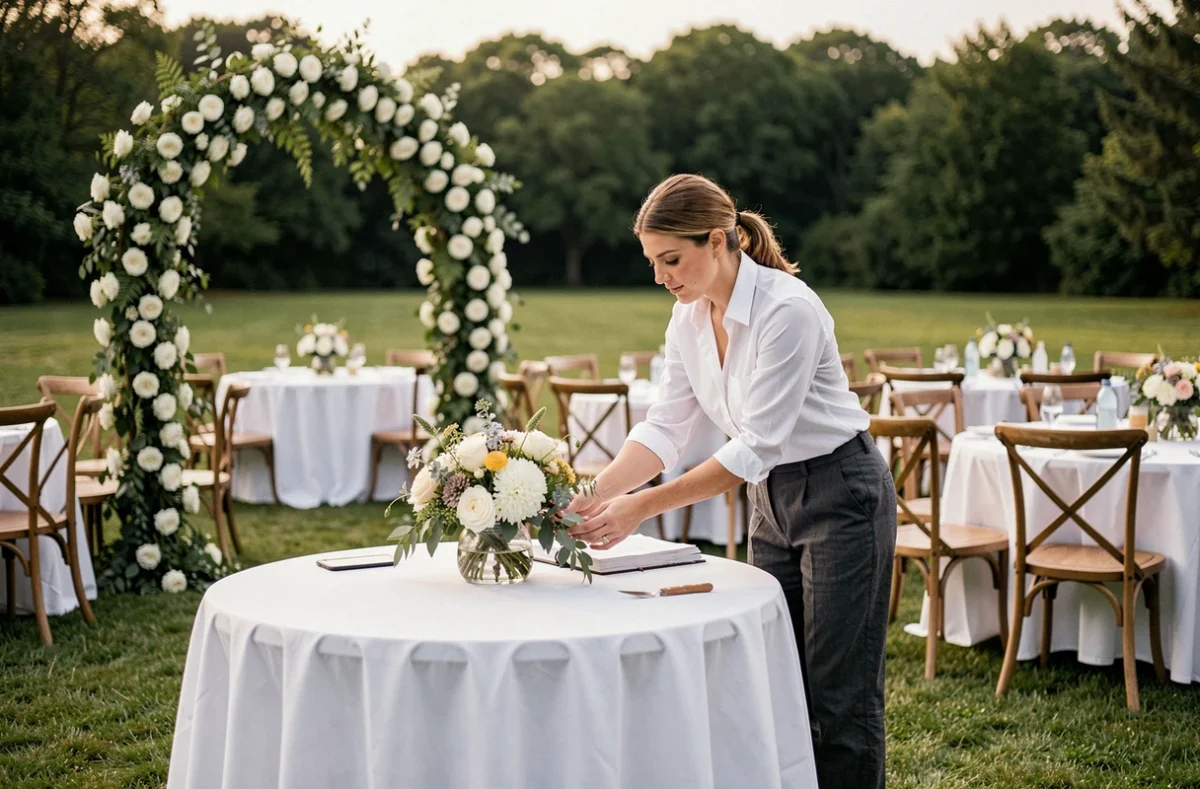
Couples who want a personalized ceremony outdoors or in an unusual venue often choose a secular ceremony. It has no legal standing in France. A civil ceremony at the town hall is still required, whether the symbolic ceremony takes place before, after, or on the same day.
Scheduling both ceremonies on the same day requires arranging transport between the town hall and the reception venue, with a timetable that allows for the travel time of guests with limited mobility.
Music and performance rights: an often-overlooked expense
Choosing between a DJ, a live band, or a personal playlist comes down to taste. However, playing music at a private event open to a large audience may involve copyright obligations, which vary depending on the venue and how the music is played.
Before booking a music provider, ask the reception venue whether performance rights are already covered by its contract to avoid a financial or administrative surprise just weeks before the big day.
Wedding season: autumn as a budget-friendly alternative
Industry professionals report a notable rise in requests for autumn weddings. Reception venues are more widely available between September and November, and vendor rates are often lower than during peak season (May–July). Autumn also offers the natural light photographers love and milder temperatures for more vulnerable guests.
Planning a wedding with peace of mind depends less on piling on decorative details than on making the right foundational decisions: an accessible venue, a budget with a buffer, a comprehensive weather backup plan, and a firmly established administrative timeline. These foundations, often invisible in the photos, are what determine whether the day runs smoothly.