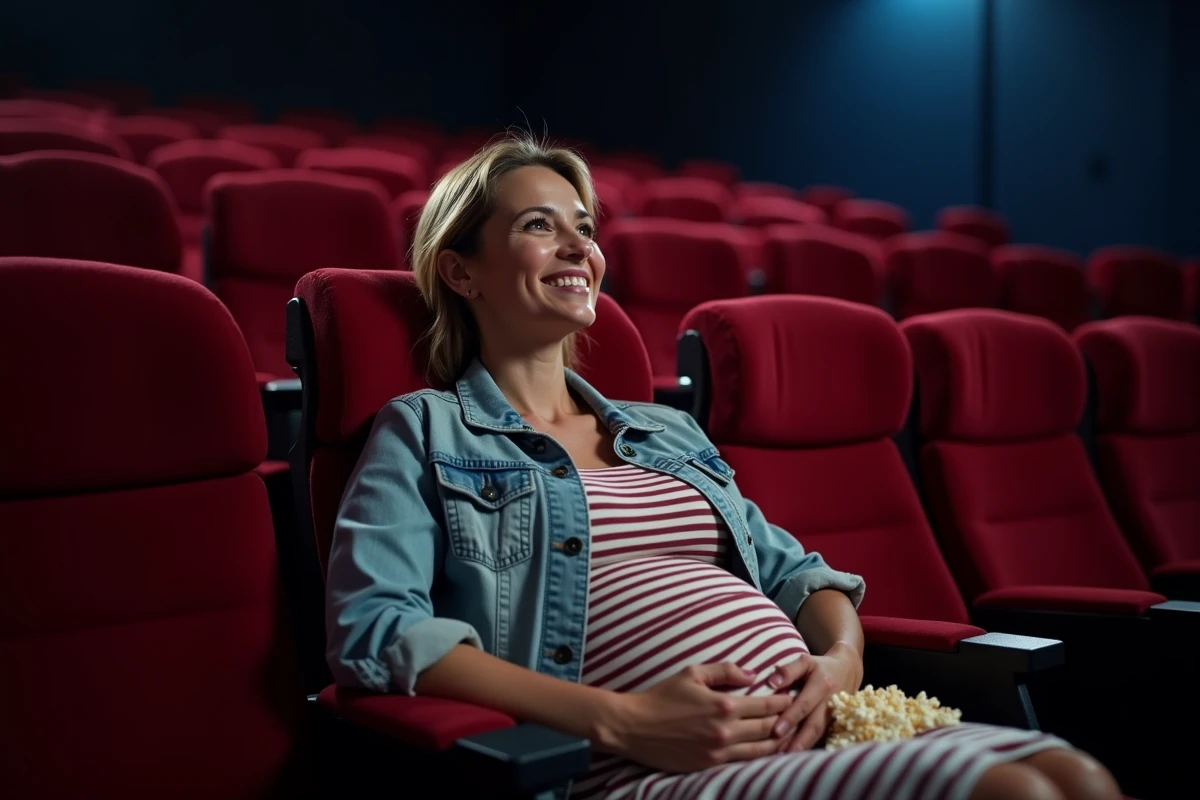
A cinema session lasts on average between one hour and thirty minutes and two hours and thirty minutes. For a pregnant woman, this duration imposes concrete physical constraints: prolonged sitting, access to restrooms, exposure to sound volume, and room temperature. All these variables change depending on the trimester of pregnancy and the type of theater chosen.
Comfort of seats and room layout: what really changes for a pregnant woman
The first reflex before booking a seat is to check the type of seats offered. A standard cinema seat, narrow and not very reclinable, quickly becomes uncomfortable from the second trimester. The pressure on the lower back and pelvis increases over the weeks, and remaining still worsens the feeling of heavy legs.
So-called premium theaters offer wider seats, often reclinable, with greater spacing between rows. This comfort gap is not a marketing detail. A reclining seat reduces lumbar pressure and allows for position changes without disturbing neighbors. Access to the central aisle is also simpler, avoiding the need to step over several people to exit during the screening.
If the theater does not offer premium seats, choosing an aisle seat remains the best option. This guarantees direct access to the aisle and restrooms without waiting for the end of the film. A thin lumbar cushion, slipped into a bag, can also compensate for the lack of back support.
For those considering going to the cinema during pregnancy in the third trimester, checking for steps at the entrance of the theater and the proximity of restrooms is part of the reflexes to adopt even before choosing the film.

Sound volume in cinemas and pregnancy: an underestimated parameter
The sound level in a cinema can reach peaks during action scenes, trailers, or special effects films. The question of the impact on the fetus often arises, and it deserves a nuanced response.
Amniotic fluid dampens external sounds, but prolonged exposure to very high volume remains a stress factor for the mother. This stress can manifest as an increased heart rate or heightened muscle tension, two reactions that the body manages less well at the end of pregnancy.
Some concrete guidelines to limit exposure:
- Avoid screenings in IMAX or Dolby Atmos formats, where the volume and bass are more intense than in a standard theater
- Prefer comedies, dramas, or animated films over action blockbusters, whose soundtracks rely more on low frequencies
- Position yourself in the middle of the theater rather than in the front rows, where proximity to speakers amplifies sound perception
No specific regulations govern sound volume for pregnant audiences. The choice of film and seating in the theater remains the main variable for adjustment.
Adapting cinema outings to each trimester of pregnancy
Tolerance for a cinema session varies depending on the stage of pregnancy. This is not a question of medical risk, but of physical comfort and fatigue management.
First trimester
Nausea and drowsiness dominate. Late morning screenings are often better tolerated than those in the evening, where the accumulated fatigue of the day makes sitting more uncomfortable. The theaters are also less crowded at these times, which limits stress related to crowds.
Second trimester
The most favorable period for a cinema outing. Nausea has generally decreased, the belly is not yet too large, and energy levels are rising. Taking advantage of this window to watch longer films or plan outings as a couple remains a wise choice.
Third trimester
The belly makes prolonged sitting difficult. Frequent urges to urinate necessitate quick access to restrooms. Choosing a short screening and an aisle seat becomes a necessity rather than a preference. It is also wise to bring a bottle of water and a light snack, as blood sugar can drop quickly.
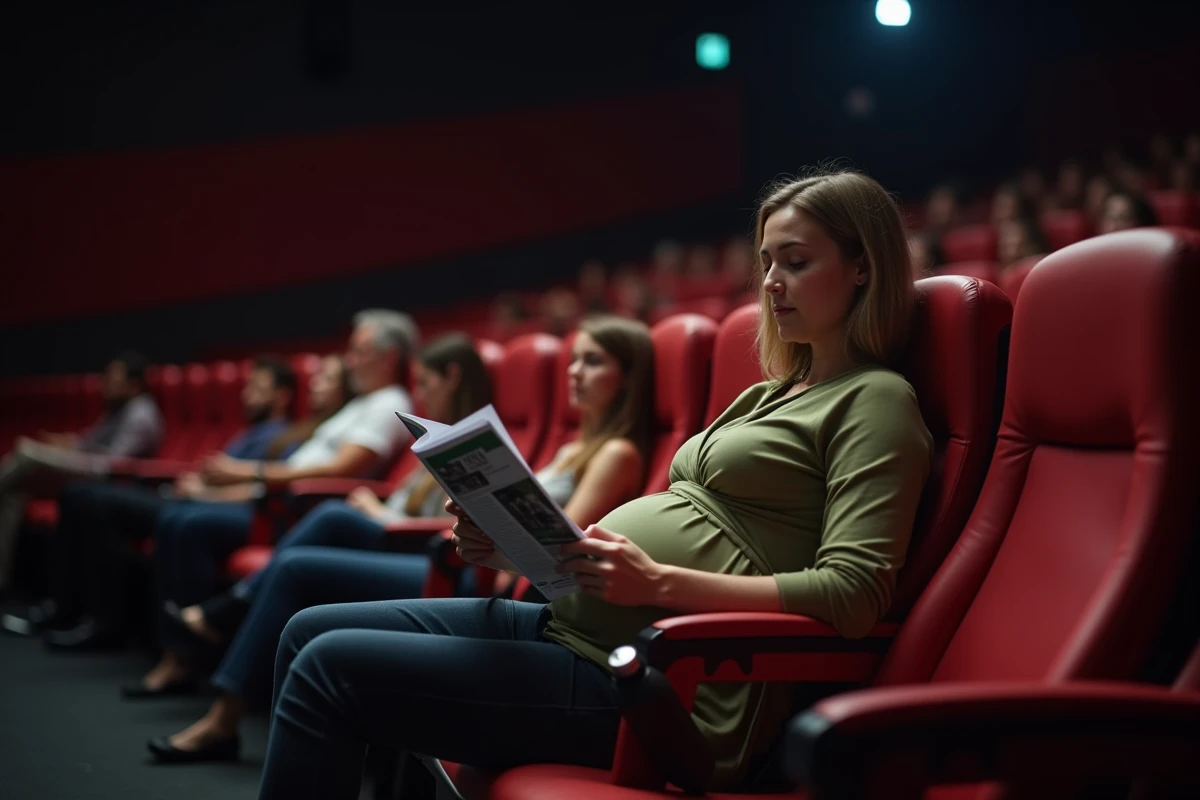
Additional services to check before booking a session
The film is just one part of the experience. Several logistical elements condition the overall comfort of the outing.
- The proximity of parking or a public transport stop, to limit walking at the end of pregnancy
- The presence of restrooms immediately near the theater, and not on another floor of the complex
- The possibility of entering the theater a few minutes before the start of the session, to settle in without rushing
- The temperature of the theater, often low due to air conditioning, which can cause chills or muscle cramps
Bringing a cardigan or a light scarf helps manage the temperature difference between the outside and the air-conditioned theater. This detail may seem trivial, but temperature variations exacerbate muscle tension common in the third trimester.
Some theaters allow you to reserve a specific seat online. This option avoids the stress of choosing on-site and guarantees a suitable seat, especially at the end of the row or in a raised area with a good view angle.
Pregnancy does not constitute a contraindication to attending cinemas, regardless of the trimester. The comfort of the session mainly depends on the chosen theater, seating, and a few simple logistical adjustments. Checking these parameters before booking transforms a potentially uncomfortable outing into a true moment of relaxation.